Table of Contents
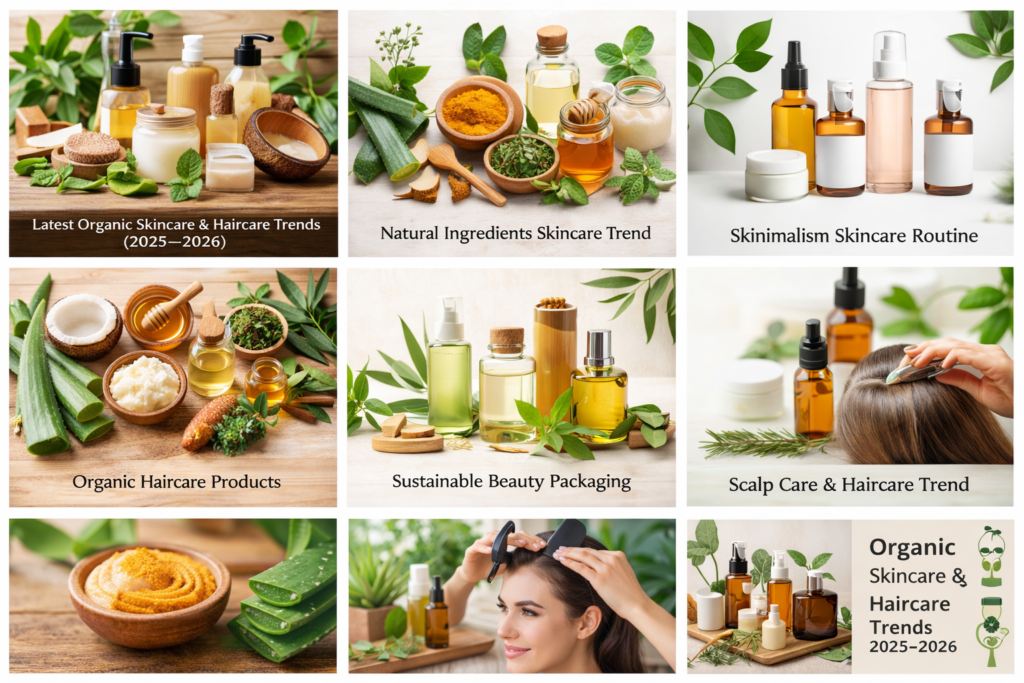
The beauty industry is evolving rapidly, and the demand for organic skincare and haircare continues to grow. Consumers today are more conscious about what they apply to their skin and hair. They prefer products made with natural ingredients, free from harmful chemicals, and produced using sustainable practices.
In 2025–2026, organic beauty trends are focusing on clean ingredients, eco-friendly packaging, personalized routines, and scientifically backed natural formulations. These trends are shaping the future of skincare and haircare, helping people achieve healthier skin and stronger hair naturally.
In this article, we explore the latest organic skincare and haircare trends for 2025–2026 and how they are transforming the beauty industry.
1. Skinimalism: Minimal Skincare with Maximum Results
One of the biggest trends in organic skincare and haircare is skinimalism, which focuses on simplifying skincare routines. Instead of using many different products, consumers are choosing multi-functional organic products that deliver multiple benefits.
For example, a single product may hydrate, brighten, and protect the skin at the same time. This approach reduces product overload and helps maintain the skin’s natural barrier.
Experts say that minimal routines using natural ingredients allow the skin to “breathe while still delivering results.” (Earmark Organic)
Popular skinimalism products include:
- Organic face oils
- Multi-benefit serums
- Natural moisturizers with antioxidants
- Herbal toners
This trend reflects a shift toward simple, effective, and natural skincare routines.
2. Waterless Skincare Products
Waterless skincare is another major innovation in organic skincare and haircare beauty. These products are formulated without water, making them more concentrated and environmentally friendly.
Examples of waterless organic products include:
- Solid cleansers
- Balm-based moisturizers
- Powder face masks
- Face oils
Waterless formulations are becoming popular because they require fewer preservatives and reduce water consumption during production. (Earmark Organic)
This trend supports sustainability while delivering stronger concentrations of natural ingredients.
3. Plant-Based Retinol Alternatives
Retinol is widely used for anti-aging, but it can irritate sensitive skin. As a result, many organic skincare and haircare brands are introducing plant-based retinol alternatives.
One of the most popular ingredients is bakuchiol, derived from the Babchi plant. It offers similar benefits to retinol, such as improving skin texture and reducing wrinkles, but with fewer side effects. (Best Organic Skin Care 2026)
Benefits of plant-based retinol alternatives include:
- Reduced fine lines and wrinkles
- Improved skin elasticity
- Gentle on sensitive skin
- Natural anti-aging properties
These ingredients are becoming a key component in organic serums and creams.
4. Microbiome-Friendly Skincare
The skin microbiome refers to the natural bacteria that protect the skin. Modern organic skincare and haircare products now focus on maintaining this balance.
Brands are adding ingredients like:
- Probiotics
- Prebiotics
- Fermented botanical extracts
These ingredients strengthen the skin barrier, reduce inflammation, and help prevent acne. (Free Yourself)
Microbiome-friendly skincare is particularly beneficial for people with sensitive or acne-prone skin.
5. Fermented Botanical Ingredients
Fermented ingredients are gaining popularity in organic skincare and haircare beauty products. Fermentation increases the potency of plant extracts and improves their absorption by the skin.
Popular fermented ingredients include:
- Fermented rice water
- Fermented green tea
- Fermented pomegranate extracts
These ingredients provide powerful antioxidants and help improve skin hydration and elasticity. (Earmark Organic)
Fermented botanicals are becoming common in organic toners, serums, and face masks.
6. Sustainable and Eco-Friendly Packaging
Sustainability is now a major focus in the organic skincare and haircare beauty industry. Many brands are adopting environmentally friendly packaging solutions.
Examples include:
- Refillable skincare containers
- Biodegradable packaging
- Recyclable glass bottles
- Plastic-free packaging
Consumers are increasingly choosing brands that support eco-conscious beauty practices. Sustainable packaging helps reduce environmental waste and promotes responsible consumption.
7. Personalized Skincare Using Technology
Technology is also influencing the organic skincare and haircare beauty market. Brands are using AI-powered tools and skin analysis apps to recommend personalized skincare routines.
Personalized organic skincare products are designed based on factors such as:
- Skin type
- Climate
- Lifestyle
- Age
AI-driven beauty solutions help consumers choose products that match their specific skin needs. (Gloavia)
This trend is making organic skincare more effective and customized.
8. The Rise of “Skinification” in Haircare
One of the biggest haircare trends in 2025–2026 is “skinification” of haircare. This approach treats the scalp with the same care as facial skin.
Products now focus on improving scalp health using ingredients commonly found in skincare, such as:
- Hyaluronic acid
- Peptides
- Botanical oils
- Vitamins
Haircare routines now include scalp serums, exfoliating treatments, and hydrating hair masks.
The trend highlights the importance of healthy scalp conditions for stronger hair growth.
9. Microbiome-Friendly Haircare
Just like skincare, haircare is also focusing on maintaining a healthy scalp microbiome.
New organic haircare products are designed to protect the scalp’s natural balance by using:
- Gentle surfactants
- Natural oils
- Postbiotic ingredients
These formulas help reduce scalp irritation and improve hair strength. (HODM Cosmetics –)
Healthy scalp care is becoming a central element of modern organic haircare routines.
10. Plant-Based Haircare Ingredients
Organic haircare products are increasingly using plant-based ingredients that nourish the hair naturally.
Popular ingredients include:
- Argan oil
- Coconut oil
- Aloe vera
- Rosemary extract
- Rice water
These natural ingredients strengthen hair, reduce hair fall, and improve shine without harsh chemicals.
Plant-based formulations are also replacing synthetic ingredients in many haircare products.
11. Sulfate-Free and Silicone-Free Haircare
Consumers are now actively avoiding harsh chemicals in haircare products. As a result, sulfate-free and silicone-free formulas have become the new standard in organic haircare.
These formulas help:
- Maintain natural hair oils
- Prevent scalp irritation
- Reduce hair dryness
- Improve hair health
Clean haircare products are now expected to be free from parabens, sulfates, and artificial additives. (HODM Cosmetics –)
12. Hydrating Hair Milks and Lightweight Treatments
Lightweight moisturizing products like hair milk are becoming popular for hydration and styling. These products provide nourishment without making the hair heavy.
Hair milk formulas usually contain botanical oils, vitamins, and plant extracts that moisturize and protect hair. (Vogue)
They are particularly useful for curly, textured, or dry hair.
Organic Haircare Routine
Follow these steps for healthy hair:
Step 1: Oil Massage
Massage your scalp with coconut or almond oil.
Step 2: Mild Shampoo
Use sulfate-free herbal shampoo to cleanse your scalp.
Step 3: Conditioner
Apply natural conditioners with ingredients like aloe vera or shea butter.
Benefits of Organic Skincare and Haircare
1. Gentle on Skin and Hair
Organic products are free from harsh chemicals, making them suitable for all skin types, including sensitive skin.
2. Rich in Nutrients
Natural ingredients are packed with vitamins, antioxidants, and minerals that improve skin texture and hair strength.
3. Chemical-Free Protection
Avoiding synthetic chemicals reduces the risk of irritation, allergies, and long-term damage.
4. Eco-Friendly
Organic products are biodegradable and produced using sustainable methods, making them better for the planet.
5. Long-Term Results
While results may take time, organic products improve your skin and hair health naturally and sustainably.
Key Ingredients in Organic Skincare and Haircare
Some powerful natural ingredients include:
- Aloe Vera: Hydrates and soothes skin
- Coconut Oil: Deeply moisturizes and strengthens hair
- Tea Tree Oil: Helps fight acne and dandruff
- Argan Oil: Adds shine and softness to hair
- Rose Water: Refreshes and tones skin
Organic Skincare Routine
A simple organic skincare routine includes:
Step 1: Cleanser
Use a gentle herbal cleanser to remove dirt and oil.
Step 2: Toner
Apply natural toners like rose water to balance pH levels.
Step 3: Moisturizer
Use plant-based creams or oils to hydrate your skin.
Step 4: Sunscreen
Choose mineral-based sunscreens to protect your skin from UV rays.
The Future of Organic Beauty
The organic beauty industry is expected to continue growing as consumers become more aware of the benefits of natural products. People are now choosing beauty products that are:
- Chemical-free
- Environmentally friendly
- Cruelty-free
- Sustainable
Modern beauty trends emphasize healthy skin and hair rather than heavy cosmetic coverage. The focus is shifting toward natural beauty, self-care, and long-term wellness.
New innovations combining nature, science, and sustainability will continue shaping the future of organic skincare and haircare.
Common Myths About Organic Skincare and Haircare
Myth 1: Organic products are less effective
Truth: They work gradually but provide long-lasting results.
Myth 2: They are too expensive
Truth: Many affordable organic options are available today.
Myth 3: Natural means no side effects
Truth: Always do a patch test, as natural ingredients can also cause allergies.
Tips for Choosing Organic Products
- Check labels for certified organic ingredients
- Avoid products with artificial fragrances
- Choose trusted brands
- Look for cruelty-free and eco-friendly packaging
Conclusion
The latest organic skincare and haircare trends for 2025–2026 reflect a strong shift toward natural ingredients, sustainability, and personalized beauty solutions. From skinimalism and waterless skincare to microbiome-friendly formulas and plant-based haircare, the beauty industry is embracing healthier and more eco-conscious practices.
Consumers are becoming more informed about ingredients and are choosing products that support both personal wellness and environmental sustainability.
By adopting organic skincare and haircare routines, individuals can achieve healthier skin and stronger hair while contributing to a greener and more responsible beauty industry.